Tskaltubo, Georgia: Abandoned Soviet Sanatoriums, Radon Baths & Prometheus Cave
Tskaltubo is Georgia's most atmospheric resort — Soviet-era sanatorium ruins, unique radon thermal springs, and world-class nature nearby. Complete travel guide: getting there, what to see, and why you need a rental car.
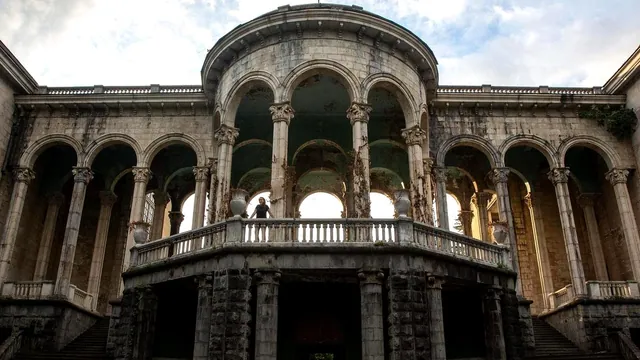
There are places in the world that resist easy description. Tskaltubo, tucked into the Imereti region of western Georgia, is one of them. It's a balneological resort with a thousand-year history, a surreal open-air architecture museum, and the perfect base for exploring some of the Caucasus's most spectacular natural sites — all at once. People come here for radon baths, for the haunting ruins of Soviet-era sanatoriums, for the Prometheus Cave, and for that singular feeling of wandering through a park where Stalin once took the waters, while magnolias bloom and birds sing overhead.
A Brief History: From Antiquity to the Soviet Riviera
The healing springs of Tskaltubo have been known since ancient times — the earliest written references date back to the 7th century AD. By the 12th and 13th centuries, Georgian chroniclers were already writing about the area's medicinal reputation. Serious scientific study of the mineral waters didn't begin until the 19th century, but what came next changed everything.
The turning point arrived in the 1920s and 30s, when Soviet authorities set about transforming Tskaltubo into a full-scale resort. The man personally responsible for its meteoric rise was Joseph Stalin himself. On his doctors' advice, he came to take radon baths for his back and leg problems — and was impressed enough that Tskaltubo soon became the premier health resort of the entire Soviet Union.
A sweeping master plan in 1951 divided the city into balneological, sanitary, and residential zones. By the 1950s–70s, Tskaltubo was home to 22 sanatoriums and 9 mineral bathhouses. At its peak, four direct trains arrived daily from Moscow, carrying workers on state-subsidized health holidays. A private bathhouse — the now-famous Bath No. 6 — was built exclusively for Stalin's personal use.
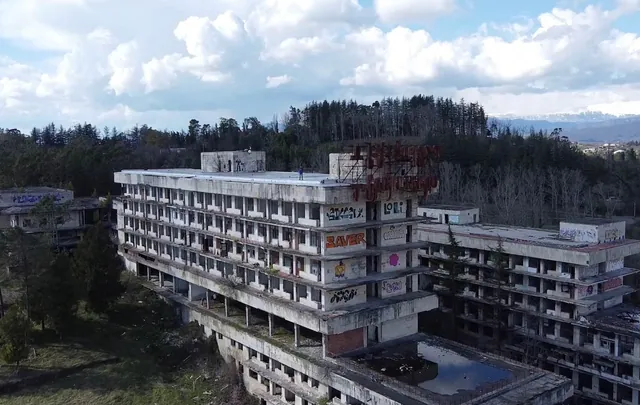
The Soviet collapse in 1991 emptied the city almost overnight. Sanatoriums shut down, some were occupied by refugees from the Abkhazia conflict, and the grand concrete palaces began their slow surrender to time and vegetation — becoming the atmospheric ruins that draw thousands of visitors from around the world today.
Water Unlike Anything Else on Earth
The true heart of Tskaltubo isn't its architecture or its history — it's the water. The local springs belong to an extraordinarily rare category: weakly radioactive radon waters of the chloride-sulphate, sodium-magnesium-calcium type. Scientists have yet to fully explain how this natural phenomenon came to exist here. The water emerges from the ground at 33–35°C — almost exactly body temperature — making immersion unusually comfortable.
Tskaltubo's radon baths are particularly effective for joint and musculoskeletal conditions, diseases of the spine, and post-surgical rehabilitation — which is precisely why Stalin came, and precisely why hundreds of thousands of visitors still make the trip. The waters also benefit the cardiovascular, nervous, and respiratory systems. A standard treatment course runs 10 to 15 sessions of 10–15 minutes each.
The main active treatment facility is the Balneological Complex at Spring No. 6 — the very bathhouse built for Stalin. It offers private cabins, communal radon pools, physiotherapy rooms, and massage facilities. Spring No. 2 is also operational.
Important note: radon baths are contraindicated for certain conditions, including active cancer. Consult a doctor before beginning any treatment course.
The Sanatoriums: Stalinist Grandeur Consumed by Jungle
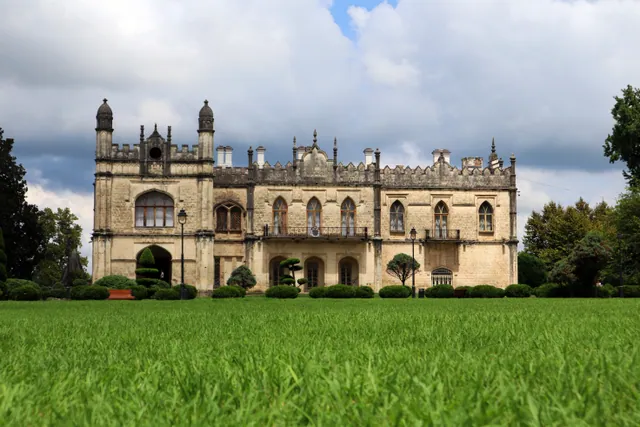
Even if you have no interest in medical tourism, Tskaltubo won't let you go — thanks to its architectural ghosts. Ringing the central resort park are dozens of Stalinist-era sanatoriums, many of them now abandoned. The effect is extraordinary: columns, ornamental plasterwork, marble staircases, and vast ballrooms through which trees have begun to grow.
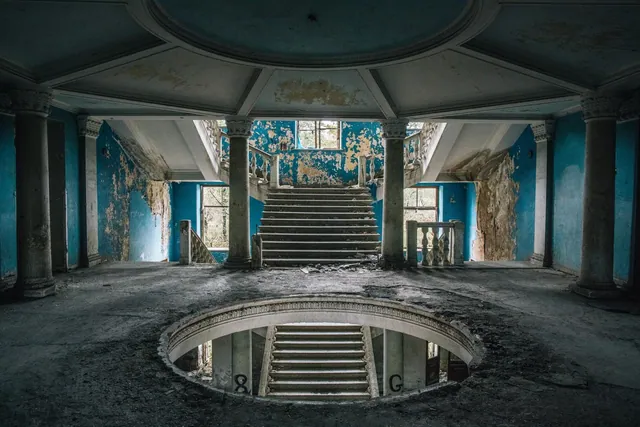
The most visited sites for independent exploration:
Sanatorium Medea (also known as the Tsentrosoyuz Sanatorium, built in 1962 for employees of the Soviet Ministry of the Food Industry) — one of the most accessible. No fence, no security. You can simply walk in and explore the floors at your own pace.
Sanatorium Metallurg — surrounded by what was once a manicured park and is now dense forest. Imposing gates remain; the complex is partially inhabited by Abkhazian refugees.
Sanatorium Shakhter and Sanatorium Imereti — monumental buildings each worth at least an hour of your time.
Bath No. 6 ("Stalin's Bath") — a standalone structure with its own remarkable story and atmosphere.
The biggest misconception about Tskaltubo is that the entire city is abandoned. It isn't. Alongside the ruins, the restored Tskaltubo Spa Resort operates, along with new hotels, restaurants, and cafes. The city is very much alive — it simply lives side by side with its own past.
What to See Nearby: World-Class Nature Within an Hour's Drive
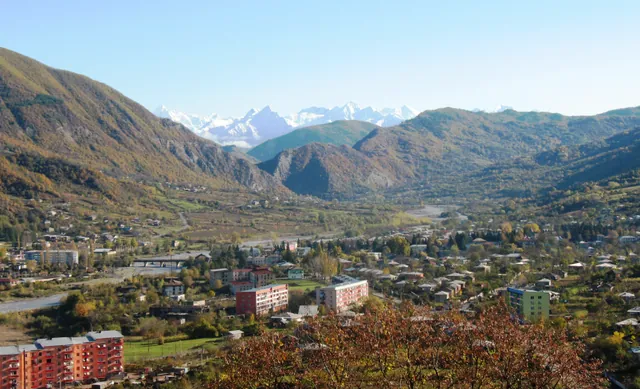
Tskaltubo makes an excellent base for exploring western Georgia. Kutaisi — the ancient capital of Colchis, with the UNESCO-listed Gelati Monastery and the cave monastery of Motsameta — is just 9 km away. Within a 30–40 km radius, several world-class natural sites await.
Prometheus Cave — roughly 20–25 km from Tskaltubo. One of the largest cave systems in Georgia, with an underground lake and boat tours through illuminated caverns. Legend holds that this is where the titan Prometheus was chained to the rock.
Martvili Canyon — a stunning canyon with turquoise water where you can take a boat ride directly beneath the cliffs.
Okatse Canyon — suspended walkways over a gorge, with views that stay with you long after you leave.
Sataplia Nature Reserve — dinosaur footprints preserved in stone, plus another cave system.
White Cave (Tskhaltsminda) — just 2 km east of Tskaltubo's center.
These sites have one thing in common: they are genuinely difficult to visit without your own transport. Public buses don't reach most of the natural attractions in the region, and hiring separate taxis for each destination adds up fast — particularly if you're planning to cover multiple sites in a single day.
Getting There — and Why Renting a Car Is the Smart Move
Tskaltubo is 230–245 km from Tbilisi and about 9–10 km from Kutaisi. By car from Tbilisi, the drive takes around 2.5–3 hours. The road is in good condition with relatively few mountain switchbacks — manageable even for less experienced drivers.
If you're coming by public transport from Tbilisi, the route goes: minibus from Didube bus station to Kutaisi, then bus No. 34 or minibus No. 30 to Tskaltubo (departures every 20–30 minutes). From Kutaisi, a taxi to Tskaltubo costs very little given the short 10 km distance.
That said, if you actually want to explore the region — the cave, the canyons, the monasteries — renting a car shifts from convenience to near-necessity. It's the only practical way, short of hiring a dedicated taxi for each trip, to move independently between sites scattered across different directions from Tskaltubo.
With a rental car, you set the itinerary: Prometheus Cave in the morning, Martvili Canyon after lunch, a stroll through Kutaisi in the evening. No negotiating with drivers, no waiting by the roadside. Cars can be picked up in Tbilisi or directly in Kutaisi at mydrive.club.
The roads throughout Imereti are generally good; you don't need an SUV. A standard sedan or compact crossover handles everything comfortably. Parking in Tskaltubo is free and plentiful.
Practical Information
Where to stay. Tskaltubo has both treatment-focused sanatoriums with full medical programs (Tskaltubo Spa Resort, Sanatorium named after S.M. Kirov) and regular hotels and guesthouses. Kutaisi, 10 minutes away, offers a much wider range of accommodation.
Best time to visit. April through October. The climate is subtropical and humid; summers are warm but not extreme. The resort is quieter in winter but remains open.
Tskaltubo Local History Museum — open daily 9:00–18:00, entry 3 GEL (roughly $1).
House-Museum of writer Otia Ioseliani — free entry, with wine tastings in the ground-floor cellar.
Stalin's Dacha — located in Tskaltubo and open to visitors.
Café Magnolia — a beautifully restored 1950s building designed by Italian architect Carlo Moretti, reopened in 2019. Worth a stop.
Central market — the best place to stock up on affordable local produce if you're staying a few days.
Bottom line
Tskaltubo doesn't fit neatly into any standard travel category. It's not simply "Soviet ruins for Instagram," not simply a spa town, and not simply a convenient stop near Kutaisi. It's a place where history literally grows through the walls, where the water genuinely works, and where every turn in the park reveals something unexpected. One day here is enough to understand why a second visit feels inevitable.