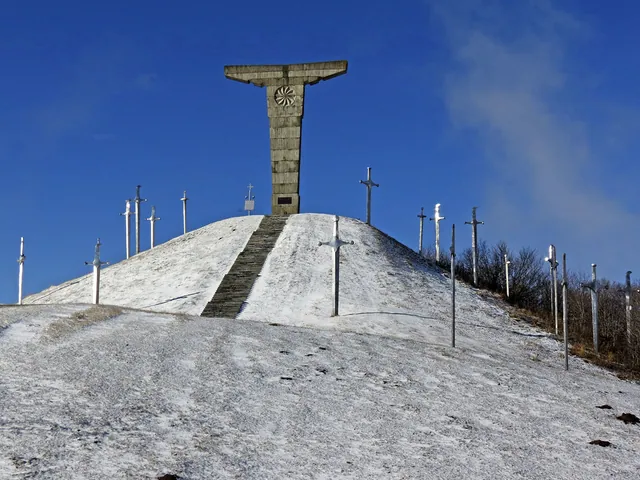
Ambrolauri, Georgia: Travel Guide to Racha's Wine Country
Ambrolauri is the home of Khvanchkara wine and one of Georgia's most underrated destinations. Complete guide: what to see, how to get there, and why you need a rental car.
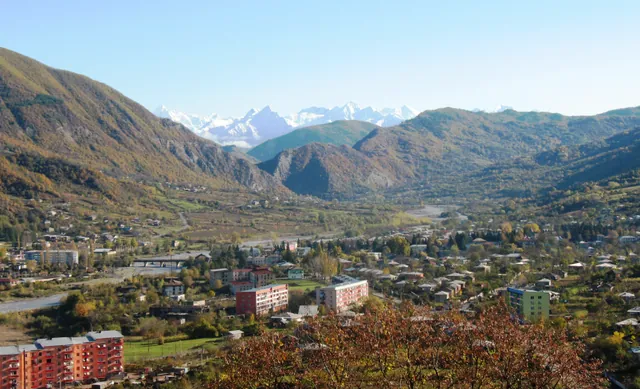
Some places in Georgia only reveal themselves to those willing to leave the tourist trail. Ambrolauri is exactly that kind of place. A small town on the banks of the Rioni River, tucked into the foothills of the Racha region, it doesn't trend on Instagram and won't appear in any "5 days, 3 cities" itinerary. But the travellers who do make the detour tend to come back — and they always bring home a bottle of Khvanchkara wine that simply cannot be found anywhere else in the world.
What Is Ambrolauri and Where Is It?
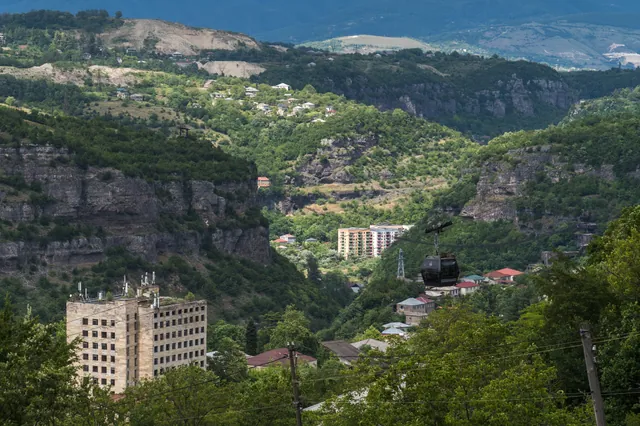
Ambrolauri is the administrative centre of the Racha-Lechkhumi region, located roughly 220–250 km from Tbilisi. By Georgian standards it's a small town — about 2,500 residents — but what it lacks in size it more than makes up for in character. The settlement dates back to the 17th century, when Imeretian kings chose these lands as their base. Today, an ancient tower standing behind the local church is all that remains of that era — a quiet footnote to a history most visitors never expect to find here.
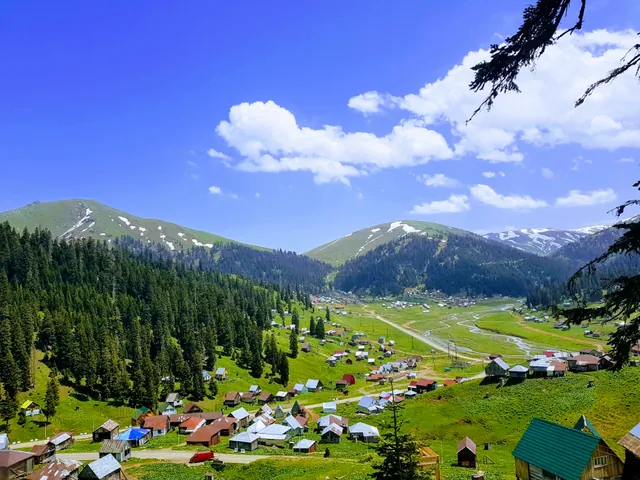
Racha is often called Georgia's Switzerland or the "Georgian Alps." There are no dramatic jagged peaks, but something arguably better: soft transitions from valley to foothills, old-growth forests, mountain air so clean it almost has a taste, rushing streams, and a silence deep enough to hear your own breathing. Locals call it "a place of pristine nature" — and that's not marketing copy, it's just accurate.
The Main Reason to Come: Khvanchkara Wine
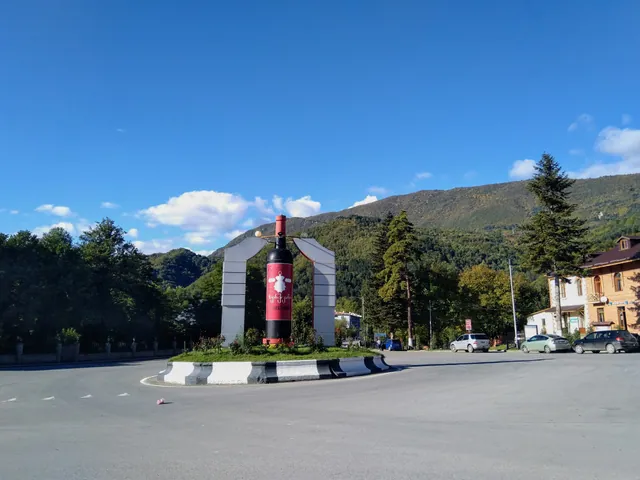
If Ambrolauri has one defining symbol, it's a bottle. Literally — a large monument in the shape of a Khvanchkara bottle stands at the entrance to the town. This naturally semi-sweet red wine, made from Alexandrouli and Mujuretuli grape varieties (blended 60/40), is produced exclusively in the Ambrolauri district. The vineyards occupy a tightly defined microzone; transplant the vines elsewhere and the flavour disappears entirely.
Khvanchkara's story begins in the 19th century, when it was produced on the estate of the Kipiani princes. During the Soviet era it became one of the most sought-after wines in the USSR — bottled under its current name since 1932. If that history sounds distant, the wine itself is very much alive.
In the heart of town, Royal Khvanchkara — the oldest winery in the region — sits at the corner of Khvanchkara Street and Kostava Street, just a hundred metres from the famous monument. The cellars hold oak barrels dating from the 1950s, each holding 10–15 cubic metres, alongside modern equipment. Tours and tastings are available and cover not only Khvanchkara but also other regional wines: Tvishi and Usakhelouri. Book ahead — it's worth it.
This is the right place to buy a bottle (or several). Prices at the winery are lower than in shops, and the quality is guaranteed. Genuine Khvanchkara is hard to find outside Georgia, so picking it up at the source is one of the strongest arguments for making this trip.
What to See Around Ambrolauri: Nature and History
Ambrolauri makes an excellent base for exploring the whole region. Most of the key sights are within 20–30 km of town — and this is where it becomes obvious why renting a car in Georgia isn't just convenient, it's essential.
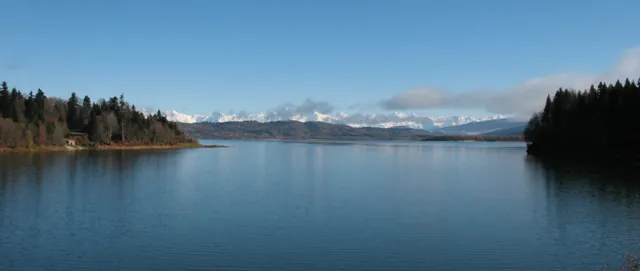
A reservoir formed when a hydroelectric dam was built on the mountain river of the same name. Sitting at over 1,000 metres above sea level, it stretches roughly 7 km long and 2.5 km wide. The drive there is a reward in itself: pine forests, alpine meadows, and on a clear day, an uninterrupted panorama of snow-capped Caucasus peaks. The lake is ideal for a picnic or some fishing.
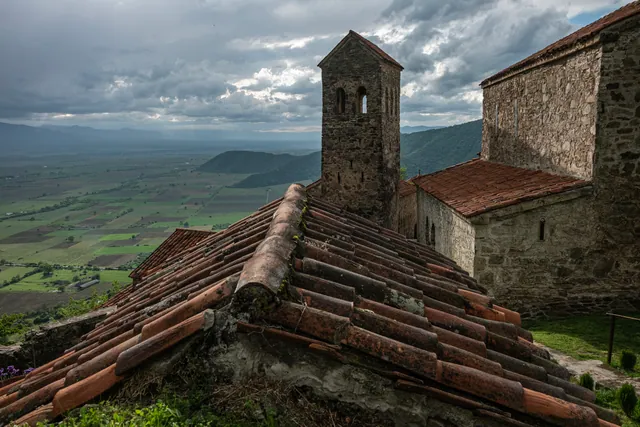
(11th century) is a listed Georgian national monument and one of the finest examples of medieval Georgian architecture. From the outside it appears understated, but step inside and the interior opens up — unique vaulted architecture and well-preserved frescoes that have survived nearly a thousand years. Located near the village of Nikortsminda, just off the Tkibuli–Ambrolauri road.
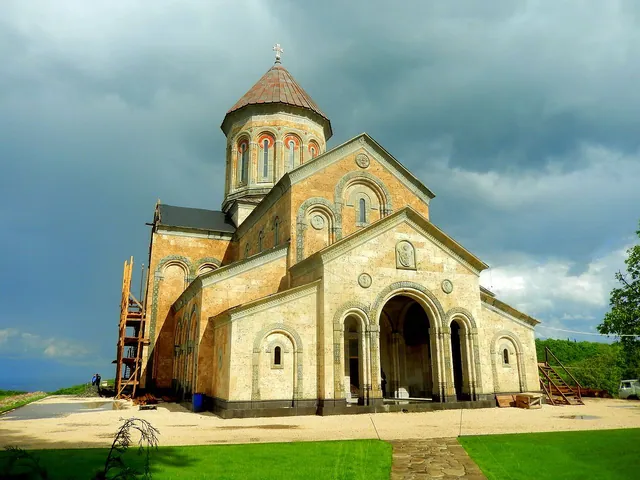
(1753) draws visitors less for its age and more for its position: built on a rocky ledge above the Rioni River gorge, 7 km from Ambrolauri near the village of Tsesi. Local legend holds that Queen Tamar spent her childhood in these lands. Near Tsesi, the ruins of the ancient Mindatsikhe fortress are also worth a look.
About 30 km north of Ambrolauri, home to one of the most beautiful synagogues in Georgia. Jewish communities settled in Racha nearly two thousand years ago, leaving a surprisingly layered cultural heritage that most visitors to Georgia never encounter.
Villages like Shovi are where Georgians themselves come to holiday — for the altitude, the quiet, and the views. On clear days, the scale of the Caucasus range becomes fully visible.
Getting to Ambrolauri
Let's be direct: getting here without a car is genuinely difficult if you want to see more than the town itself.
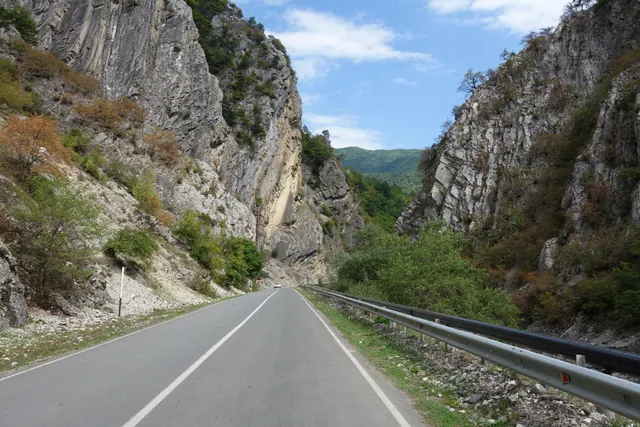
The most practical option by far, and really the only one that lets you explore the region properly. From Tbilisi it's about 220–250 km, taking roughly 3.5 to 4 hours. The route crosses the Nakerala Pass (over 1,200 m above sea level), combining highway, mountain switchbacks and a proper mountain pass. The road surface is a mix of asphalt and stone. The scenery along the way is the kind that makes you pull over.
Renting a car in Georgia is a straightforward decision for anyone planning to go beyond Tbilisi. You can book online before you even land — no queues, no uncertainty. Having your own wheels matters most in Racha: the sights are spread across the region, public transport is sparse, and the ability to stop at a viewpoint, detour to a lake, or follow a dirt track to a village church is what makes the difference between a good trip and a great one.
Shared minibuses run from Tbilisi's Didube station to Ambrolauri. Journey time is around 5–5.5 hours. Schedules are limited, so it's worth securing a seat in advance. This works fine if you're only visiting the town itself with no plans to venture further.
Minibuses also run to Ambrolauri via a scenic mountain pass with views over Lake Shaori — a pleasant approach to the region from western Georgia.
Possible, but expensive. From Tbilisi, expect to pay around €80 or more one way.
What Else Is There in Town
Ambrolauri is small but surprisingly complete as a base.
The central square near Kostava Street has a detailed tourist information board mapping the region's main sights. The town's Tourist Information Centre is nearby for anyone wanting more detail on routes.
Modest in size but genuine in content: over 500 works by 20th-century Georgian artists, including pieces by Lado Gudiashvili and David Kakabadze. Founded in 1965, it sits in the town centre close to the Royal Khvanchkara winery.
Good for an evening walk. The river is a constant companion throughout Racha — sometimes roaring through narrow gorges, sometimes spreading lazily across wide valley floors.
Guesthouses and small hotels in Ambrolauri offer the kind of warm hospitality Georgia is known for. Eating out is affordable and good: expect local cheeses, grilled meats, fresh trout from mountain streams, and whatever wine the host has made themselves.
In summer and early autumn, the town hosts wine festivals and craft fairs — if your timing lines up, the atmosphere is worth staying an extra night for.
When to Go
The best time to visit is May through October. In summer, Racha avoids the heat that pushes Tbilisi above 35°C in July — temperatures here stay in the comfortable 22–26°C range, with green hillsides, clear rivers, and long evenings.
Autumn is special. September and October bring the rtveli — Georgia's grape harvest season. Fresh wine, hillsides turning red and gold, cool evenings by a wood fire: this is the Georgia that travel writers reach for when they're trying to explain why the country gets under your skin.
In winter, the Nakerala Pass can close due to snow, so trips during this period require checking road conditions in advance.
Practical Tips
- Rent a car — it's the single most important decision for getting the most out of this region. With your own vehicle, you can cover Lake Shaori, Nikortsminda, Barakoni and the mountain villages in a single day trip.
- Plan for at least 2 days — Racha rewards those who slow down.
- Book your winery visit in advance — a quick message the day before is enough.
- Bring cash — cards are often not accepted in small villages or at private wineries.
- Don't rush — the right move is to stop, pour a glass of wine on the Rioni riverbank, and watch the mountains.
Ambrolauri isn't a box to tick or a landmark to photograph and leave. It's the kind of place you visit because you want something real — a slower pace, a wine that exists nowhere else, and the quiet satisfaction of finding a corner of the Caucasus that most travellers haven't discovered yet.