Chiatura, Georgia: Soviet Cable Cars, Industrial Gorges, and a Side of the Country Most Tourists Never See
Complete travel guide to Chiatura, Georgia — Soviet-era cable cars, Mgvimevi Monastery, Katskhi Pillar, and practical tips including car rental. Off-the-beaten-path Imereti.
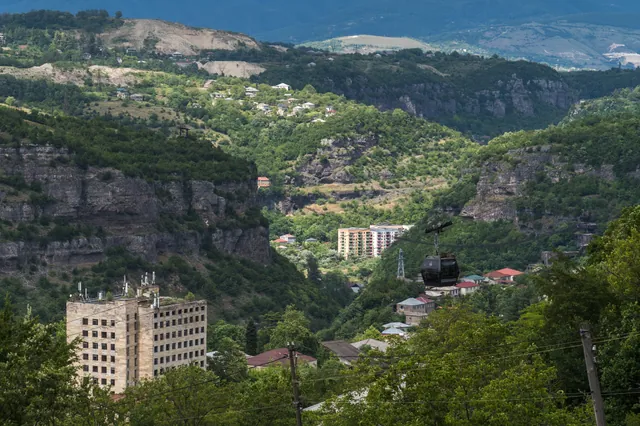
Some places in Georgia aren't about wine or beaches. They're about the feeling that time stopped somewhere around 1975 and nobody bothered to restart it. Chiatura is exactly that kind of place — a manganese-mining town wedged into a river gorge, strung together by rusting Soviet-era cable cars that still carry real people to real jobs every single day. If you're looking for an authentic, off-the-beaten-path Georgia experience, this is it.
Where Is Chiatura and How to Get There
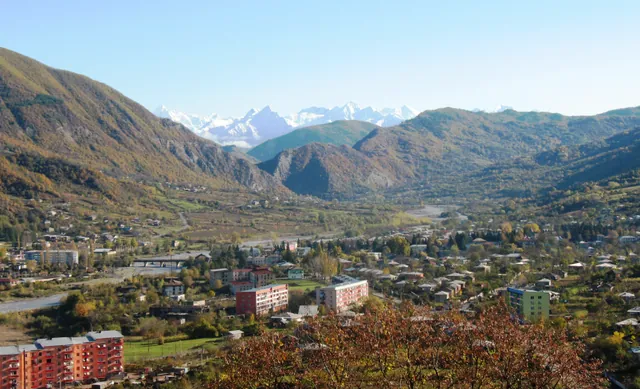
Chiatura sits in the Imereti region of western Georgia, roughly 185–190 km from Tbilisi. By car along the M6 highway, the drive takes about 2.5 hours — and honestly, driving is the only way to do this trip properly. The road itself is scenic: rolling Imeretian hills, vineyards, mountain streams. And once you arrive, you'll want the freedom to explore the surrounding area on your own schedule.
Public transport is possible but genuinely awkward. There's no direct bus from Tbilisi — you'd need to transfer via Sachkhere or Kutaisi, with a marshrutka (minibus) from Kutaisi costing around 10 GEL and taking about an hour. A taxi from Tbilisi runs roughly €65 one way. For most travelers, especially those combining Chiatura with other sights, renting a car is the clear best option — and the only way to comfortably hit Chiatura, Mgvimevi Monastery, and the famous Katskhi Pillar all in the same day. The Pillar is just 11 km from town.
The City That Invented the Urban Cable Car
Chiatura was established in 1921 as an industrial center on top of one of the world's richest manganese deposits. The Chiatura Manganese mining operation is still active today — you'll see the shafts dotting the cliffs and cargo gondolas ferrying ore through the air.
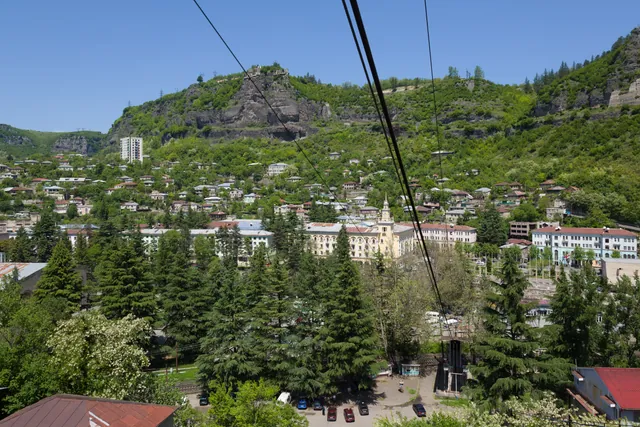
But the real story here isn't about manganese. It's about how a city gets built vertically. The town center sits at the bottom of a gorge; residential neighborhoods are scattered across clifftops more than 100 meters above. In the 1950s, Soviet engineers rolled out a solution unlike anything tried before in the USSR: a citywide network of passenger cable cars called "Line-25." The first station opened in 1954 — the first passenger cable car system in the entire Soviet Union. By 1989, there were 17 lines in operation.
Many have since fallen out of use or been dismantled, but several lines still run today. And this isn't a heritage attraction — it's public transit. Locals ride the gondolas to work, to the market, to visit neighbors. That, in itself, is worth the trip.
What to See in Chiatura
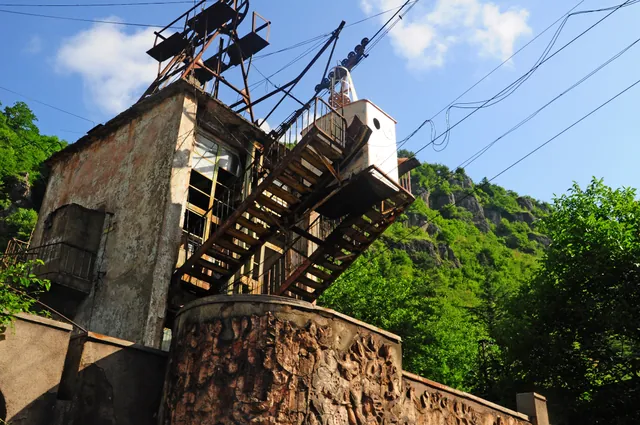
The cable cars are the undisputed star of the show. Ride at least one — ideally more. The cabins are original Soviet sheet metal with wooden benches, a direct-line phone to the operator, and windows that frame extraordinary views of the gorge, shafts, and river below. Currently operating lines include Sanatori, Mukhadze, Lezhubani, and Naguti.
Mgvimevi Monastery is one of the few monasteries in Georgia literally carved into a cliff face. This active women's monastery dates to the 13th century and is just a 20-minute walk from the town center. The walls are covered in frescoes, the atmosphere is hushed and otherworldly. It was founded by Prince Rati and survived a Timurid invasion at the end of the 14th century.
Soviet architecture — for anyone interested in urbanism or post-Soviet aesthetics, Chiatura is a goldmine. Stalinist buildings with spires in the center, standard-issue panel blocks perched on cliffs, derelict industrial structures in every direction. Travelers describe the overall feel as somewhere between a Soviet sci-fi film and a video game — surreal, atmospheric, and strangely beautiful.
The Kvirila River embankment — a place to simply slow down. The murky mountain river, evening light on the cliffs, almost no other tourists in sight.
Katskhi Pillar: Don't Skip This on Your Way Out
If you're driving to Chiatura — which, again, we strongly recommend — leaving without visiting Katskhi Pillar would be a genuine mistake. It's a freestanding limestone column, 40 meters tall, with a 10th–11th century church perched on top. That sentence sounds made up. It isn't.
The Pillar is only 11 km from Chiatura, about 15 minutes by car heading toward Kutaisi. After roughly 9 km, turn right — GPS coordinates for the turn: 42.287306, 43.216153. The climb to the top takes about 20 minutes on a proper stairway; the views from up there are the kind you don't forget.
Near the base of the Pillar, there's also an 11th-century church with exceptional stone carvings that's worth a slow walk-around.
A practical day-trip plan: leave Tbilisi early, spend 4–5 hours in Chiatura, then swing by the Pillar on the way back and return via Kutaisi. Total distance around 400 km — a full but very doable day.
Practical Tips
When to go. Chiatura works year-round, but spring and summer are the most photogenic — the green vegetation against black manganese-dusted mountains creates a striking contrast. Autumn is lovely too. Winter roads in the elevated parts of the area can be icy.
Food. The dining scene is extremely limited — important to know upfront. There are a couple of basic cafés in the center and small grocery shops, but that's about it. Bring snacks or plan a proper meal in a neighboring town.
Accommodation. There are virtually no hotels or guesthouses in Chiatura itself — the city isn't set up for overnight tourists. Most travelers treat it as a day trip from Tbilisi or Kutaisi (50–70 km away). If you want to stay nearby, look for options in Sachkhere.
Car rental. As mentioned, this is the most practical way to visit. Roads in Imereti are in good shape, and the M6 route has no difficult sections — any driver with basic experience will be fine. Rent in Tbilisi or Kutaisi and book online in advance for the best rates and availability.
What to bring. Comfortable walking shoes — the terrain in town is uneven, and the path to Mgvimevi Monastery requires sure footing. A hat in summer. Cash — some cable car stations and cafés don't accept cards.
Are the cable cars safe? Yes — this is the question everyone asks. They look ancient. They are ancient. But they're maintained and used by locals daily. The best approach is to trust the process and enjoy it.
Why Go Now
Chiatura is the rare kind of place that hasn't been discovered by mass tourism yet. No queues, no restaurants with laminated tourist menus, no souvenir shops. What you'll find instead is something increasingly hard to come by in Georgia's more popular destinations: the real thing.
The city goes about its business. Miners take the gondolas to their shifts. Nuns pray in a cliff-face monastery. Kids kick a ball around under Soviet apartment blocks. You stand there watching, and you realize this is exactly what you came to Georgia for.
Rent a car, set off early, take your time — and Chiatura will deliver.