Gonio Fortress, Georgia: 2,000 Years of History Near Batumi
Gonio Fortress (Apsaros) in Adjara, Georgia — history, opening hours, ticket prices and how to get there from Batumi. A complete visitor's guide.
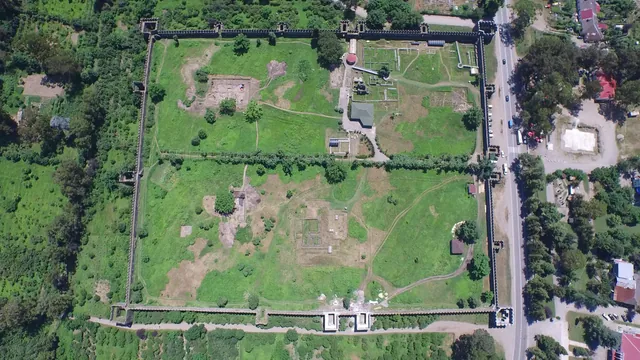
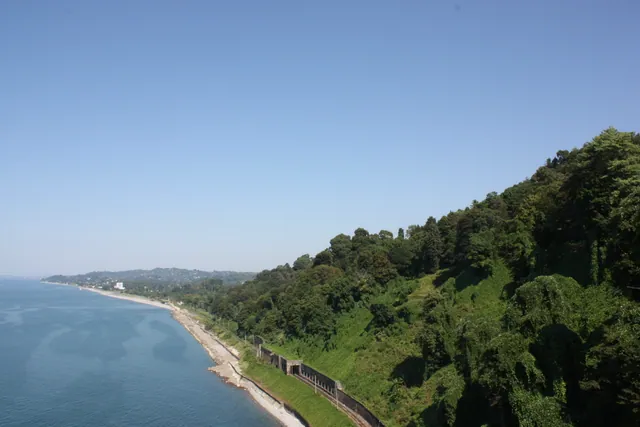
You're driving south along the Black Sea coast from Batumi, palms and turquoise water on one side — and then, suddenly, a long stretch of ancient dark stone walls appears on your left. That's Gonio Fortress: one of the oldest surviving fortifications in Georgia, a place that has outlasted the Roman Empire, Byzantium, and three and a half centuries of Ottoman rule. Myth and history run so close together here that it's hard to say where one ends and the other begins.
Where Is Gonio Fortress and How to Get There
The fortress sits in the village of Gonio, about 12–15 km south of Batumi along the E70 coastal highway toward the Turkish border — which is just 5 km further south. The walls are right on the roadside and impossible to miss. There's free parking at the entrance.
By rental car or taxi — the most comfortable option, taking about 20–25 minutes from central Batumi. With your own wheels, you can combine the visit with other spots along the same stretch of coast: the beaches at Gonio and Kvariati, the Waterfall of St. Andrew the Apostle, or the border village of Sarpi. The same day works well with the Batumi Botanical Garden on the north side of the city.
The budget alternative is a marshrutka (minibus) from Tbilisi Square in Batumi toward Gonio or Sarpi — about 2 GEL and 20–25 minutes. The catch is getting back: you'll need to flag down passing transport on the highway, which is less ideal with kids or in summer heat.
Two Millennia in One Rectangle: A History of the Fortress
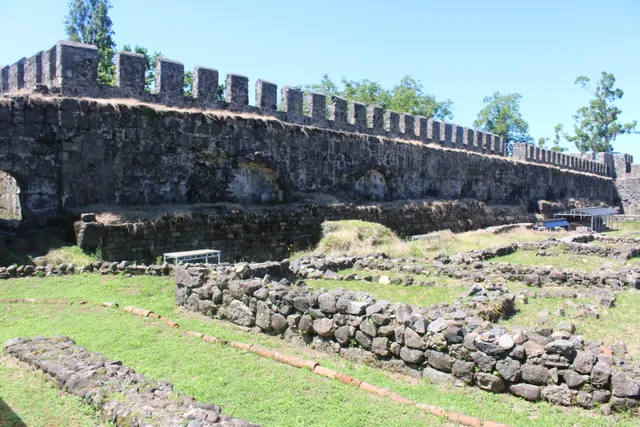
The earliest written reference to this place comes from Pliny the Elder, the Roman writer of the 1st century AD. The fortress was then called Apsaros — a name derived from ancient Greek meaning roughly "spotted." By the 2nd century AD, a full Roman garrison was stationed here: a strategic stronghold on the eastern Black Sea coast, at the mouth of the Chorokhi River.
The Romans chose well. The fortress guarded the entrances to the Chorokhi and Adjaristskali gorges — the main corridors connecting the coastline with inland Georgia. It was equipped to an impressive standard for its era: a water supply system, ceramic-pipe sewage, a theatre, and even a hippodrome.
After Rome fell, the fortress passed to Byzantium, then became a Genoese trading post in the 14th century. In 1547, Gonio was absorbed into the Ottoman Empire — and remained Ottoman for nearly 330 years, until 1878, when Adjara was ceded to the Russian Empire.
In 1994, Gonio-Apsaros was officially designated a historical monument of the Roman period and converted into a museum-reserve.
What to See Inside: Towers, Baths, and a Mysterious Tomb
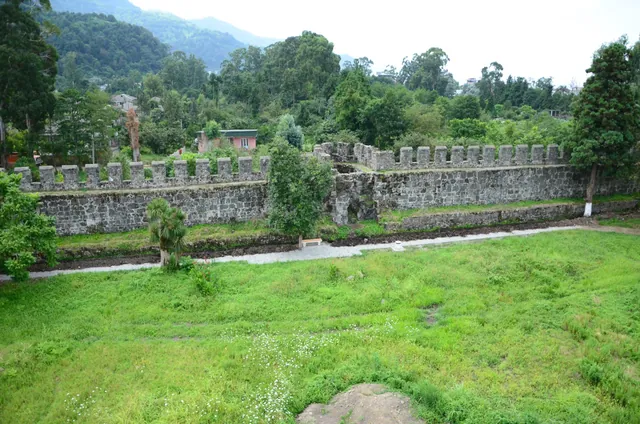
The layout of the fortress has changed remarkably little over two thousand years — a strict rectangle enclosed by walls roughly 5 m high. The perimeter stretches 900 metres, with 22 towers along the walls, most of which still stand. There is only one entrance: through the western gate.
The Tomb of the Apostle Matthew is the fortress's greatest mystery. According to tradition, this is the burial site of the evangelist Matthew. Georgian authorities have officially prohibited any excavations near the site. A small chapel now marks the presumed grave.
The Eastern baths are remarkably well-preserved and visible next to the museum building. Alongside them you can see sections of the original ceramic-pipe water supply system.
The on-site museum houses finds from decades of archaeological excavation: ancient amphorae, coins from multiple eras, fragments of weapons, and scale models showing the fortress at different periods.
The Legends That Make Gonio Unforgettable
The fortress has two names — and each carries its own story. "Gonio" first appears in the chronicles of a 14th-century historian from Trebizond. "Apsaros," however, reaches back into Greek mythology: according to legend, this is where Aeëtes, king of Colchis, buried his son Apsyrtos, who was killed by Jason during the quest for the Golden Fleece.
Practical Information: Tickets, Hours, and Tips
Address: Village of Gonio, E70 highway, approx. 12–15 km south of Batumi.
Opening hours: Daily, 10:00–18:00.
Admission:
- Adult — 10 GEL
- Under 6 — free
- Ages 6–16 — 2 GEL
- Student — 3 GEL
- Guided tour — 25 GEL (Georgian, Russian, and English)
- Audio guide — 10 GEL
How long you'll need: About an hour to an hour and a half. With a guide and museum visit — up to two hours.
A few tips:
- Come in the morning — even in peak August, the fortress rarely gets crowded.
- Bring water: there are no cafes or shops inside.
- With a car, the beaches at Gonio and Kvariati are just minutes away.
What Else to See Nearby
With a rental car, the area south of Batumi makes for a satisfying full-day loop:
- Gonio Fortress — morning (10:00–12:00)
- Waterfall of St. Andrew the Apostle
- Gonio or Kvariati beach — afternoon swim
- Sarpi — the Georgian-Turkish border crossing
The whole loop covers no more than 30 km each way from Batumi.
Is Gonio Fortress Worth Visiting?
Gonio isn't a spectacular fortress in the way that Rabati Castle in Akhaltsikhe is — it won't overwhelm you with restored towers. What it offers instead is unvarnished, two-thousand-year-old history. Stones laid by Roman soldiers. Walls that have witnessed legionaries, Genoese merchants, and Ottoman commanders.
If you're in Batumi and want something more than beach and khinkali, Gonio is a half-day trip worth the drive — easy to combine with the rest of Adjara if you have a car in Batumi or Tbilisi.