Lagodekhi Nature Reserve Georgia: Hiking Trails, How to Get There & Travel Guide
Complete guide to Lagodekhi Nature Reserve — Georgia's oldest protected area (est. 1912). 5 hiking trails, Black Rock Lake trek, waterfalls, wildlife & why renting a car is essential.
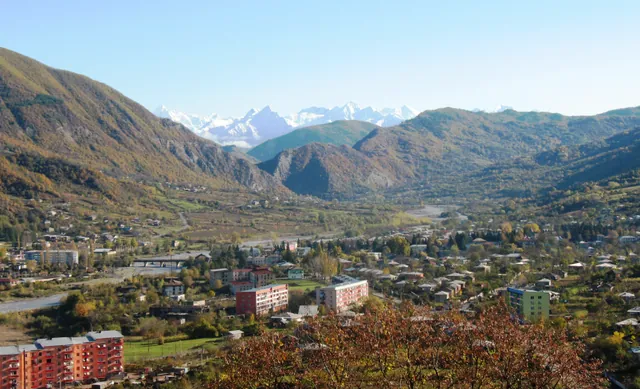
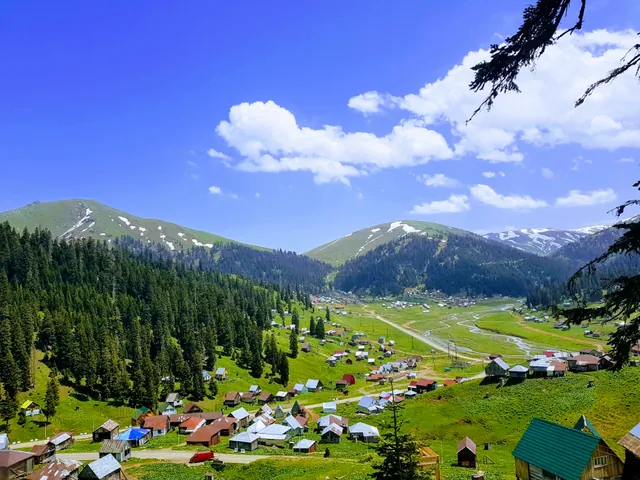
Ask anyone about Georgia's nature and you'll hear the same names: Kazbegi, Svaneti, Tusheti. Lagodekhi never makes the list — and that's entirely undeserved. Tucked into the far eastern corner of the Kakheti region, where the Greater Caucasus mountains rise abruptly from the Alazani plain, this reserve holds intact beech forests, thundering waterfalls, glacial lakes, and over fifty species of mammals. And almost no tourists. If you're looking for Georgia's wild side without the crowds, you just found it.
A Brief History: Georgia's First Nature Reserve
Lagodekhi was established in 1912, making it the oldest protected area in Georgia — predating every other national park in the country by more than half a century. It was founded under the Russian Empire by the Imperial Russian Geographical Society. In 2003, the original reserve was split into two zones: a strict nature reserve (accessible only for scientific research) and a managed nature reserve open to visitors. All hiking takes place in the latter.
The combined protected area covers 24,451 hectares (about 94 sq mi). Elevations range from 590 to 3,500 metres (1,935–11,480 ft) above sea level. The park borders Azerbaijan to the east and Dagestan (Russia) to the north — some trails run directly along the international boundary.
Wildlife and Nature
Lagodekhi is one of the few corners of the Caucasus where the ecosystem has remained genuinely undisturbed. The climate is continental-subtropical: the gorges stay warm and humid for much of the year, producing exceptional biodiversity.
Flora. Over 1,400 species of flowering plants have been recorded in the reserve. The forests consist of hornbeam, Caucasian oak, beech, linden, maple, birch, and ash. Twenty-six plant species found here are listed in Georgia's Red Book, including chestnut, yew, Caucasian persimmon, and bear nut. Lower elevations feature dense undergrowth of lianas and moss; higher slopes open into subalpine meadows.
Fauna. The reserve is home to around 150 bird species and over 50 mammal species, plus 12 reptile and 5 amphibian species. Brown bears, lynx, wolves, Caucasian red deer, chamois, roe deer, jackals, and wildcats inhabit the mountain forests. Eagles, bearded vultures, griffon vultures, and kestrels nest on the alpine plateaus. Birdwatchers come specifically for the Caucasian black grouse and Caucasian snowcock — two rare species that are nearly impossible to find elsewhere. More than 40 animal species are on Georgia's Red Book list.
The reserve holds Important Bird Area (IBA) status from BirdLife International and is recognised as a special ecoregion by WWF.
Trails: From a Half-Day Walk to a Multi-Day Trek
The managed reserve has 5 marked trails of varying difficulty. All coordinated through the visitor centre at the park entrance.
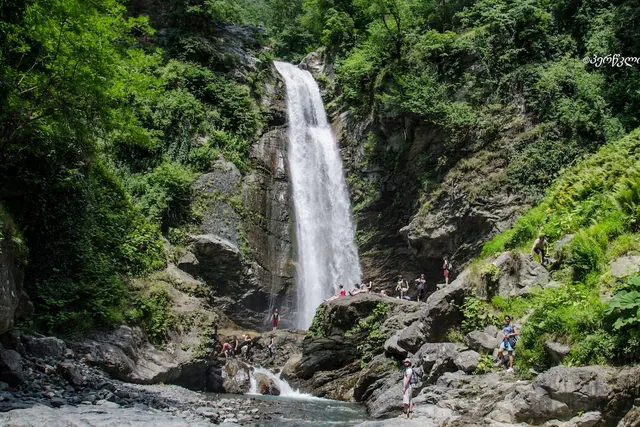
1. Rocho (Black Grouse) Waterfall — 9.5 km / 5.9 mi round trip, 3–5 hours, moderate The most popular trail. Winds through dense hornbeam forest to a 6-metre waterfall in a scenic rocky amphitheatre. Well marked and manageable for most visitors.
2. Ninoskhevi (Great) Waterfall — 8.5 km / 5.3 mi round trip, 4–6 hours, moderate–hard Leads to one of Georgia's most impressive waterfalls — a multi-tiered cascade dropping around 40 metres. Starts from a separate information centre in Gurgeniani village, not the main park entrance.
3. Machi Fortress — 10.5 km / 6.5 mi, 4–6 hours, moderate Begins in the village of Matsimi. Passes through the Dark Gorge (Bneli Kheoba) — where hazelnut trees arch overhead carpeted in moss — before climbing to a 9th-century medieval fortress that served as the summer residence of Kakhetian kings.
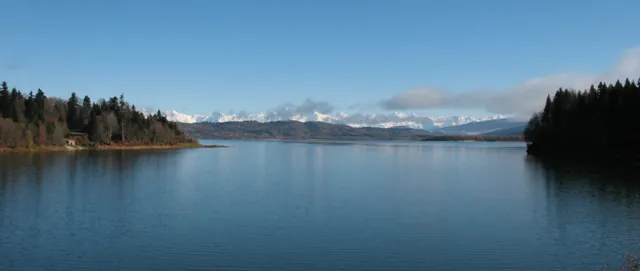
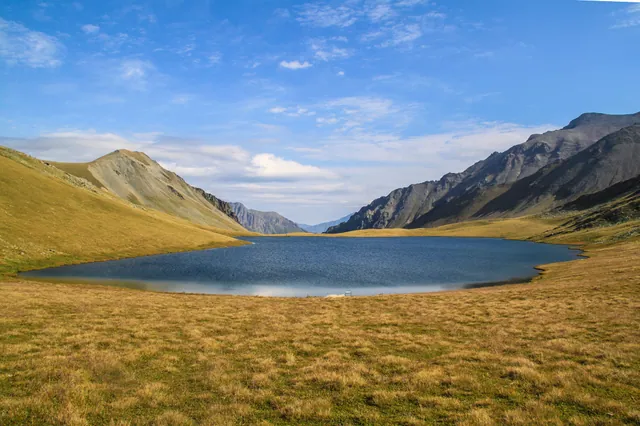
4. Black Rock Lake (Shavtskhali) — 47–48 km / 29–30 mi round trip, 2–3 days, strenuous The flagship route. The lake sits at roughly 2,800–3,000 metres (9,200–9,800 ft) and forms a natural border between Georgia and Russia. Climbs through beech forest, subalpine meadows, and alpine zones. Weather station shelter on route.
5. Nature Study Trail — short, easy, educational Suitable for families or anyone wanting an introduction to the park's ecosystem without serious exertion.
Practical Information
Best time to visit: May–October. June–September optimal for most trails. Winter closes most routes. Autumn brings spectacular forest colours.
Entry and permits. Registration at the visitor centre required. Permits for certain trails and overnight camping issued on the spot, free or nominal fee.
Accommodation. Guesthouses and small hotels in Lagodekhi town. Designated camping spots inside the park, including a shelter at the weather station on the Black Rock Lake route.
Getting There: Why Renting a Car Makes All the Difference
Distance from Tbilisi: approximately 160 km (100 miles), around 2.5–3 hours east via the Telavi–Lagodekhi road.
Public transport is possible: shared minibuses run from Tbilisi's Isani Metro Station from around 7:30 am. But several of the park's trails start from different access points, not a single main entrance — Ninoskhevi from Gurgeniani, Machi from Matsimi — making local taxis with unpredictable schedules the only alternative.
Renting a car in Tbilisi is effectively the only practical way to explore the reserve independently. With a rental from MY.DRIVE you can:
- leave early (cooler temperatures, quieter trails, better wildlife sightings);
- move freely between the park's different trailheads;
- combine Lagodekhi with other Kakheti highlights — Sighnaghi, Kvareli, Telavi — in a single trip;
- travel without depending on minibus timetables or shared taxis.
The road is fully paved and in good condition — a standard car handles it fine, no 4WD required. From Telavi to Lagodekhi: around 80 km (50 miles), approximately 1 hour 20 minutes.
Food and Wine in Kakheti: What to Eat and Drink in the Region
Lagodekhi is about nature. But it sits in Kakheti — home to around 70% of all Georgian wine production and a winemaking tradition stretching back 8,000 years. The nearest major wine hub is Kvareli, where the Kindzmarauli Corporation's cellars are carved directly into the mountainside.
Worth trying: Saperavi — full-bodied, deeply coloured red with dark berry notes; Kindzmarauli — semi-sweet red, an everyday local favourite; Rkatsiteli — dry white or Georgia's signature amber style when fermented skin-on in qvevri.
Qvevri are clay amphoras buried in the ground, used to ferment and age wine for months — producing that distinctive amber colour with notes of dried fruit, honey, and nuts. A style increasingly admired on the international natural wine scene.
Food: mtsvadi grilled over dried grapevine cuttings (not charcoal) for a distinctive smoky-sweet aroma; chakapuli — spring lamb stew with white wine, cherry plum, and tarragon; shoti bread baked in a tone clay oven; farm-made sulguni and Imeretian cheeses.
Lagodekhi vs. Other Georgian Nature Destinations
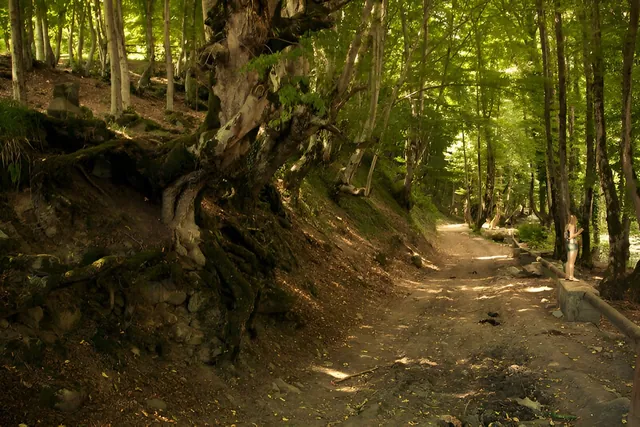
Not open rocky terrain and glaciers — dense, humid, almost jungle-like forest with a multi-layered canopy. Trails run along rivers, through narrow gorges, under moss-covered trees. You can drink from mountain streams throughout (rare on Georgian trails). And the crowds simply aren't here — Kazbegi in peak summer is a different world.
Before You Go
- Bring cash — card payments aren't accepted everywhere.
- Layer up — temperatures drop quickly at elevation, the forest stays damp.
- Proper hiking footwear is essential — trails become muddy after rain.
- Pack insect repellent — leeches present on lower sections in warm months.
- Download offline maps (Maps.me or Gaia GPS) — signal inside the park is unreliable.
- Start early — summer heat builds through the morning; early departure gives cooler conditions and better wildlife chances.
Lagodekhi doesn't announce itself. No viewpoint queues, no packed parking lots, no souvenir stalls at the trailhead. Just forest, mountains, water, and silence. That, in the end, is the whole point.