Inguri Dam, Georgia: The World's Tallest Arch Dam Hidden in the Caucasus
Inguri Dam is the largest hydropower plant in the Caucasus and one of the tallest arch dams in the world. Full visitor guide: how to get there by rental car, observation platform, Jvari Reservoir, and practical tips.
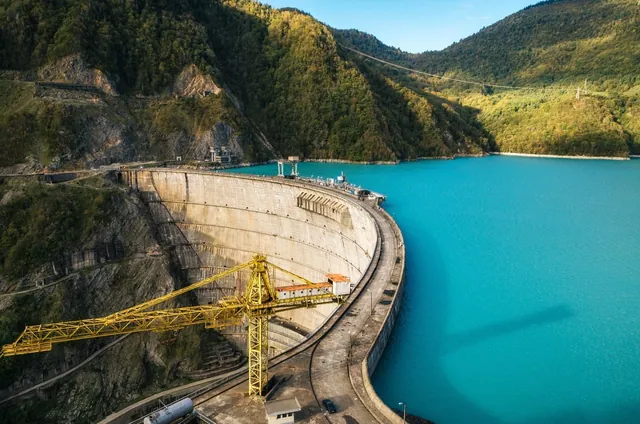
Some places can't be captured in a photograph. Inguri Dam is one of them. Standing on the observation platform above a 270-metre drop, with a ribbon of turquoise water far below, you start to grasp what you're looking at: not just a power plant, but one of the greatest engineering achievements of the 20th century — buried in the Caucasian mountains and, somehow, still off most travellers' radars.
If you're heading to Svaneti or exploring western Georgia by rental car, this is a non-negotiable stop.
A World Record Most Visitors Don't Know About
The Inguri Hydroelectric Power Plant sits near the village of Jvari, where the Inguri River rushes down from the highlands of Svaneti into the Colchic lowlands. Its arch dam stands 271.5 metres tall — roughly the height of a 90-storey building — and stretches 728 metres along its crest. It currently ranks 8th in the world by height among all dam types, and holds the title of the tallest arch dam built in a gorge anywhere on the planet. Soviet engineering journals once compared it to the Eiffel Tower — given that the Eiffel Tower stands 324 metres, the comparison isn't far off.
Construction was completed in 1978. Building on fractured limestone required producing a custom high-strength concrete mix on-site. The station's installed capacity is 1,300 MW, making it the largest hydroelectric power plant in the Caucasus to this day. It supplies electricity to Georgia and exports power to Abkhazia and Russia's Krasnodar region.
There's also an unusual geopolitical dimension worth knowing. The dam and water intake are located on Georgian-controlled territory, while the turbine hall and part of the tunnel run through Abkhazia — a breakaway region unrecognised by most of the world. As a result, this facility became one of the very few places where Tbilisi and Sukhumi have been forced to maintain cooperation despite the unresolved conflict.
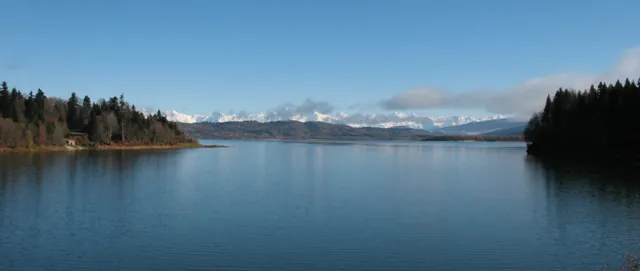
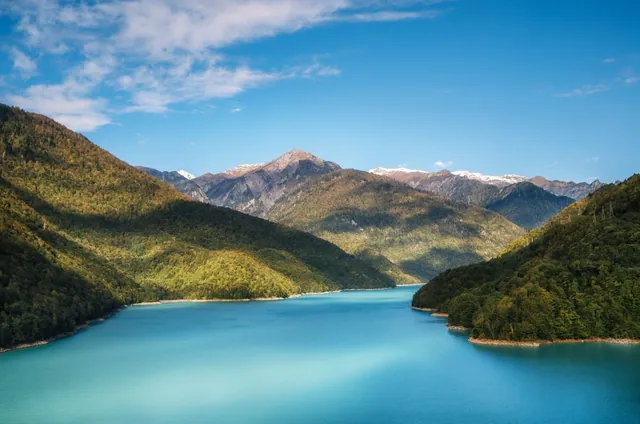
The Jvari Reservoir, held back by the dam, stretches for over 20 kilometres up the gorge. Up close it resembles a small inland sea; further upstream, the fjord-like scenery and impossibly vivid turquoise water leave most visitors speechless — no camera does it justice.
What to See and Do
The on-site facilities are modest, but perfectly sufficient for a rewarding visit.
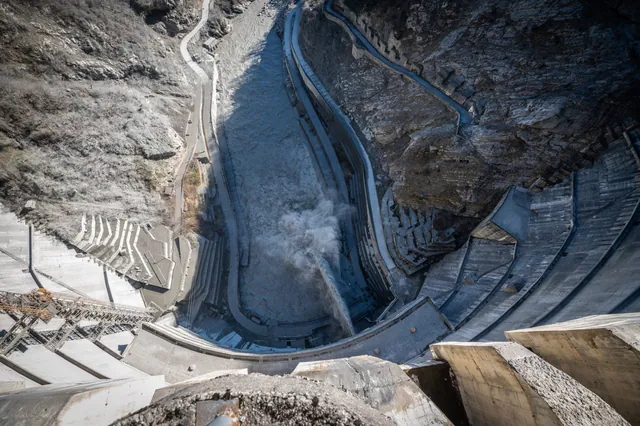
Observation platform — the main attraction. It offers a vertiginous view down to the dam face and the gorge below. Several information boards in multiple languages cover the dam's history and technical specs. Entry to the platform is free (correct at time of writing). A small outdoor cinema has recently been added nearby, screening a documentary about the history and operation of the Inguri plant — worth watching before or after the walkout.
Boat trip on the reservoir. Motorboat rides on the reservoir are available at the dam and are popular with both locals and visitors. The view back at the dam face from the water — flanked by sheer cliffs — is completely different from the platform perspective, and well worth the small cost.
Important — checkpoint rules. Private vehicles are not permitted past the checkpoint at the entrance. You enter on foot, but the walk to the observation platform is short. Just park at the barrier and walk in.
Food and drink: there are no guaranteed food facilities on-site, so bring water and snacks — especially if you're travelling with children or plan to spend time on the reservoir.
Getting There: a Car Is Essentially Your Only Option
The Inguri Dam is located near the village of Jvari (GPS: 42.760524, 42.036196), roughly 15–20 km from Zugdidi along the road toward Mestia.
There is no public transport that goes directly to the dam. Minibuses from Zugdidi head toward Mestia and pass nearby, but the turn-off is easy to miss and drivers won't stop for you there. This is why renting a car is not just the most convenient option — it's essentially the only practical way to get here independently. A taxi from Zugdidi is possible but more expensive and less flexible.
A rental car also unlocks a significant bonus: after the dam, you can continue straight up into Svaneti — Mestia is about two more hours along a scenic mountain road. This makes for one of the most spectacular day routes in Georgia.
Distances from major cities:
- From Tbilisi — approx. 334 km, about 4–4.5 hours by road
- From Batumi — approx. 125 km, about 2 hours
- From Kutaisi — approx. 130 km
The best place to rent a car is Tbilisi or Batumi, where competition keeps prices lower. Book through MY.DRIVE — free city delivery, no mileage limits, and online booking in minutes. In peak season, a small hatchback runs from around $30–40/day; book in advance for better rates. Use offline navigation — mobile signal in the gorge is unreliable — and save the GPS coordinates before you leave.
When to Go and What to Bring
The dam is accessible year-round, but the best window is May through October. In summer the reservoir is full and the water colour is at its most vivid. Autumn adds yellow and rust tones to the gorge walls — postcard territory. Winter can make the mountain road to and from Mestia challenging.
What to pack:
- Comfortable walking shoes — you'll cover some ground on foot
- A light jacket or windbreaker — the gorge stays noticeably cooler than the lowlands, even in summer
- A fully charged phone with offline maps downloaded
- Water and snacks — no food on-site
- Cash — boat rides and any local services are cash-only
Inguri Dam fits naturally into any western Georgia itinerary. If Svaneti is already on your plan, the detour here adds just 30–40 minutes. If you're making a dedicated trip, half a day is enough to take it all in — the platform, the documentary, a boat ride, and a long look at a gorge that really shouldn't have a dam in it.
It's the kind of place people describe when they get home: "I didn't expect it to hit that hard."