Driving in Georgia: Traffic Rules Every Tourist Should Know
Speed limits, fines, alcohol rules, parking in Tbilisi — a practical guide to traffic laws in Georgia for tourists renting a car in 2025–2026.
Renting a car and driving yourself around Georgia is one of the best decisions you can make on this trip. The roads are manageable, the scenery pays off, and you move on your own schedule. What can ruin it fast is a fine you didn't see coming — or a roadside stop you weren't prepared for. Here's everything that actually matters: speed limits, alcohol rules, phones, kids in the car, parking in Tbilisi, and how to handle police.
Speed Limits
Georgia drives on the right. The basic speed limits are:
- In towns and cities — 60 km/h
- Outside built-up areas — 90 km/h
- Motorways — 110 km/h
There's a practical detail worth knowing: Georgian traffic law has a +10 km/h tolerance before fines kick in. So in the city, cameras won't flag you until you exceed 70 km/h; on rural roads, until 100. That's the enforcement threshold — not an invitation to cruise at 70 through Tbilisi.
Fines for speeding:
- 20–50 km/h over the limit — 50 GEL (~$18)
- More than 50 km/h over — 200 GEL (~$72) and up
Speed enforcement in Georgia is more sophisticated than many tourists expect. Fixed cameras, average-speed cameras (which calculate your speed between two points), and police operating from unmarked civilian vehicles with on-board radars are all in use. The S1 highway toward Mtskheta and the Tbilisi bypass are known camera stretches. Don't assume you're safe just because there's no patrol car in sight.
Alcohol Behind the Wheel
Georgia makes wine the way other countries make excuses for it. But driving after drinking is treated seriously here.
The legal blood alcohol limit is 0.3‰ (0.03% BAC) — roughly one drink puts you near that line. Treat it as zero.
Penalties for drunk driving:
- Fine: 700 to 2,500 GEL (~$250–$900), depending on BAC level and repeat offense
- License suspension: up to 6 months
- If an accident is involved — criminal prosecution is possible
Since 2025, police have also been testing for drugs when they suspect impairment. Some substances stay detectable in the body for weeks — worth factoring in.
The math is simple: if you're drinking at dinner, take a taxi. The rental car will be there in the morning.
Seatbelt and Phone
These are the two fines tourists pick up most often, because both feel minor until they're not.
Seatbelt: mandatory for the driver and front-seat passenger. As of 1 May 2026, the fine increased to 50 GEL (up from 40). The rear seat isn't legally required, but that's about the law, not about physics.
Phone in hand: 50 GEL fine. This applies not just to calls but to holding your phone at all — including at a red light. Permitted: Bluetooth, CarPlay, Android Auto, hands-free speakerphone where you're not holding the device.
Travelling with Children
Georgia's rules for kids in the car:
- Under 3 years old — must be in a child safety seat, or held by a belted adult aged 16 or older
- Under 12 years old — back seat only
- Leaving a child under 6 alone in the car — prohibited
If you're travelling with kids and booking a rental, ask about child seats when you reserve — it's easier than sourcing one last minute.
Headlights, Documents, and a Few Rules That Catch People Out
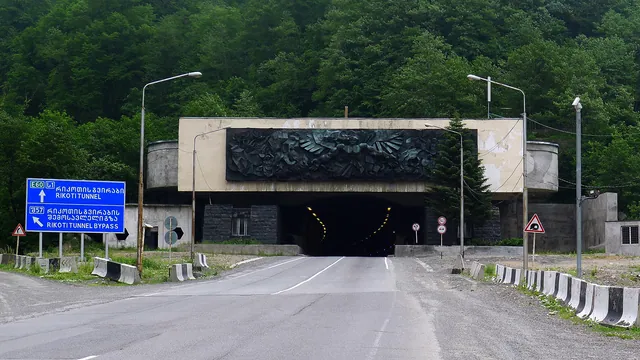
- Headlights are required at night, in tunnels, and in bad weather. Forgot to turn them on when entering a tunnel? That's a 15 GEL fine
- Documents to carry at all times: your driving licence and the vehicle registration certificate
- Foreign driving licences are accepted in Georgia as long as they use the Latin alphabet — no International Driving Permit required in most cases. See our full breakdown in Do You Need an International Driving Permit in Georgia?
- At unmarked intersections, the right-of-way belongs to the vehicle approaching from the right
- U-turns on red are prohibited
- Pedestrian crossings: you must stop and give way. Cameras enforce this, especially in central Tbilisi
- Throwing litter from the car: separate fine — around 300 GEL. Not a joke
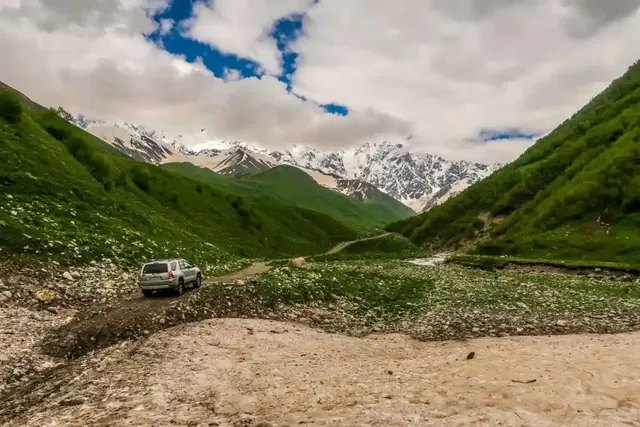
One more thing about Tbilisi's road culture: local drivers are confident, sometimes aggressive, and occasionally creative with lane discipline. Don't match that energy — it's a shortcut to either a fine or a dent. On mountain roads like the route to Kazbegi, the same applies: drive your own pace, use pull-offs to let faster vehicles pass, and watch for oncoming traffic on blind corners.
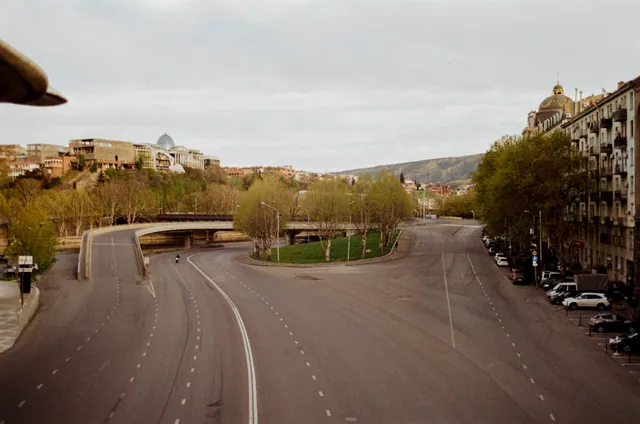
Parking in Tbilisi
Central Tbilisi has paid parking, and the system makes sense once you understand it — but it will confuse you the first time if you don't know what to look for.
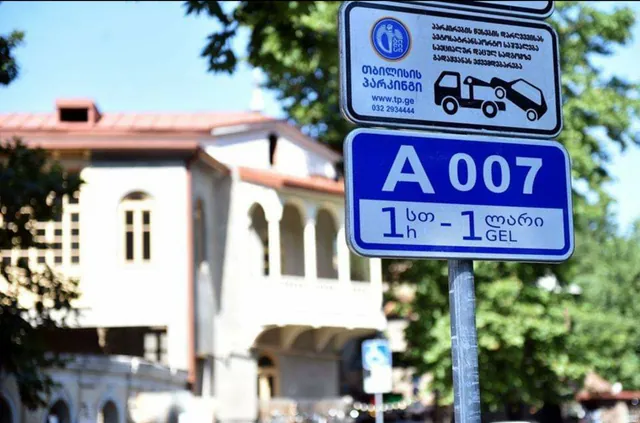
In central districts, there's a zonal hourly system. Look for a rectangular sign on a pole near the parking spot — it shows a zone code (something like A722 or B103) and the hourly rate:
- Zone A — 1 GEL/hour
- Zone B — 2 GEL/hour
- Zone C — 3 GEL/hour
The first 15 minutes are free — useful for quick drop-offs or a fast errand. Beyond that, you need to pay.
How to pay: the official «Tbilisi Parking» app (iOS and Android, run by the city), pay terminals on the street, or the website parking.tbilisi.gov.ge (Georgian only — use browser translation). The app requires registration with your vehicle number and a document ID; some foreign passports aren't accepted immediately. If the app doesn't work, street terminals function without registration.
Outside the zoned central streets, regular municipal parking applies: 50 GEL/year or 25 GEL for six months — irrelevant for short visits.
A few things to know about enforcement: towing is active in Tbilisi. An unpaid parking fine runs around 50 GEL; getting your car back from the impound adds another 50–100 GEL on top. Parking on the pavement is grounds for immediate impoundment even if it looks like everyone's doing it.
Bus lanes on major Tbilisi streets — including Rustaveli Avenue and Chavchavadze Avenue — cannot be used by private cars. Fine: 100 GEL, enforced by both cameras and patrols.
Rental Cars and Fines
When you rent a car, any fines issued during your rental period ultimately come back to you — the rental company receives them and charges the renter. Cameras photograph the licence plate, and Georgian plates registered to rental companies are fully traceable. There's no anonymity in a rental.
If you're still planning your trip and want to get the details sorted before you go, check our FAQ or browse places and routes.
Dealing with Police
Georgian traffic police are generally polite and speak reasonable English. If you're pulled over:
- Stop immediately and switch on your hazard lights
- Keep hands visible; no sudden movements
- Present documents when asked — don't reach for everything at once
- Do not offer a bribe — it's a criminal offence and everything is recorded
- If you receive a fine, pay within 30 days to avoid penalties. Pay within the first 10 days and you get a 20% discount
Minor violations with a calm, cooperative driver sometimes end in a warning. Don't count on it — but it happens.
Bottom line
Georgia's traffic rules are logical and broadly in line with European standards. The things that actually catch tourists off guard: speed cameras in places that don't look monitored, a strict alcohol limit that's lower than most people assume, and phone fines that are now on par with speeding fines. Ten minutes with this article is enough to drive through Georgia without surprises.