
Azeula Fortress in Kojori: Complete Visitor Guide (Near Tbilisi)
Azeula Fortress (Kojori Fortress) — a free medieval citadel 14 miles from Tbilisi. History, how to get there by car, taxi or bus, what to see, practical tips.
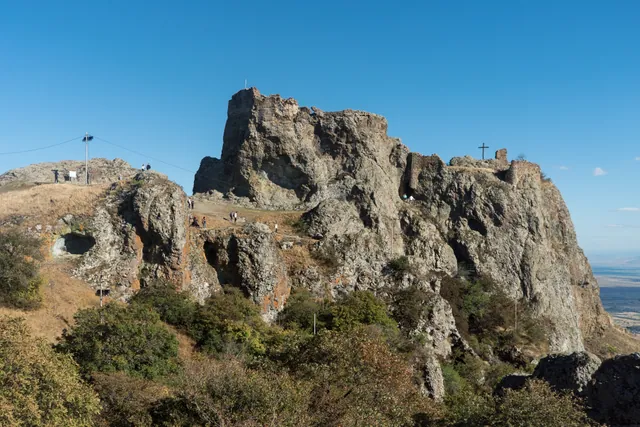
Georgia rewards the curious traveler. While most visitors tick off Mtskheta, Kazbegi, and Sighnaghi, one of the most atmospheric spots near the capital sits almost unvisited on a ridge above the city. Azeula Fortress — also known as Kojori Fortress, Agarani, or Kojris-tsikhe — has stood on its volcanic peak for over a thousand years, watching over Tbilisi in silence. Entry is free, the drive is easy, and the views from the walls are genuinely unforgettable.
Azeula, Kojori, Agarani — Why Does This Fortress Have So Many Names?
The fortress has collected names across the centuries. Azeula is the name of the mountain it sits on — 1,340 m above sea level. Agarani is its earliest Georgian name. Kojris-tsikhe, meaning "Fortress of Kojori," came later. The Seljuk Turks who occupied it called it Kyor-Oglu. All of these refer to the same place.
The exact date of construction is still debated: some historians date the original structure to the 8th century, others to the 9th or 11th. What's clear is its strategic purpose — the fortress controlled two major trade and military routes: Tbilisi to Trialeti, and Gardabani to Shida Kartli.
A Thousand Years of History: From David the Builder to Queen Tamar
In the early 11th century, the Seljuk Turks seized the fortress. That changed when David IV — David the Builder — recaptured it and handed it to Prince Iovane Orbeli, founding patriarch of the noble Orbeliani family.
In 1123, David IV formally confirmed the fortress as Orbeli's seat. But in 1177, the Orbelis' descendants staged a rebellion against King George III — the father of Queen Tamar. Royal forces stormed Azeula the same year.
The most poignant chapter belongs to Queen Tamar herself (1166–1213). She used Azeula as a summer residence, and in the final months of her life, gravely ill, she spent around six months within its walls. By tradition, this is where she died.
Later centuries brought an Iranian siege in 1488, a royal palace built nearby in the 17th century by King Rostom, and the Kabeni monastery whose ruins still stand close to the fortress.
What's Left — and What You'll Actually See
Azeula today is a ruin, but an impressive one. Significant sections of the walls and towers survive. The fortress was built on a volcanic peak — nature did half the defensive work.
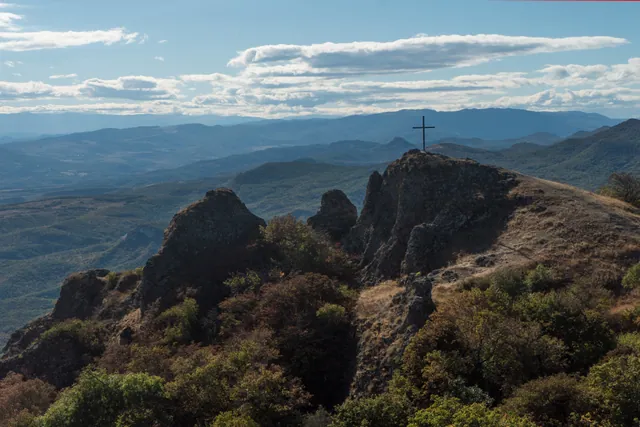
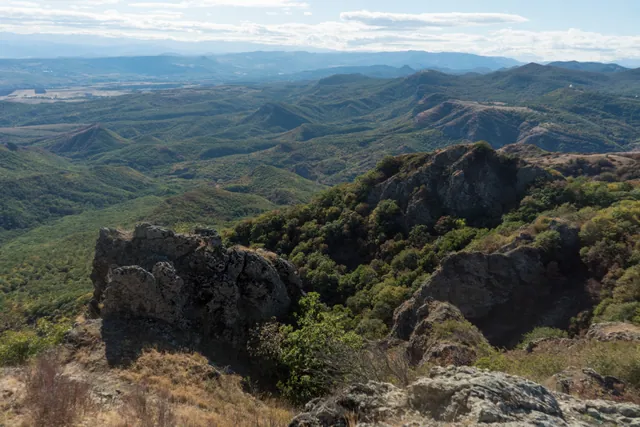
The views from the walls are worth the trip on their own: mountain ridges on one side, open plains on the other. Mountain eagles nest near the fortress.
Just below the fortress, there's a military cemetery, a small church, and a memorial to the cadets who died defending Tbilisi during early 20th-century conflicts.
Getting to Azeula Fortress
The fortress is about 20–22 km from central Tbilisi. The road climbs, so travel time depends on how you get there.
By rental car
If you're traveling Georgia with a rental car, Azeula makes a perfect half-day trip. The drive from the city takes 30–40 minutes. The road is paved almost all the way, but the final stretch is a rough track — park where the pavement ends and walk the last 600 m up to the fortress.
Renting a car lets you time your visit for golden hour and combine the trip with Ananuri on a future run to Kazbegi.
By taxi
A taxi from Tbilisi to Kojori and back, with waiting time, typically runs around 40–70 GEL. Arrange this in advance rather than using an app.
By city bus
Bus №10 departs from Orbeliani Square and takes about an hour to reach Kojori village. The fare is 1 GEL each way. From the bus stop, it's a 2.5 km walk (around 30 minutes) up to the fortress. Budget a solid half-day.
Kojori Village: What Else to See Nearby
Kojori is a quiet mountain resort village — Soviet-era dachas, empty lanes, clean mountain air — a sharp contrast to the city below.
The most historically charged stop nearby is the dacha of Lavrentiy Beria — Stalin's secret police chief. The building is well-preserved and stands as an unsettling piece of 20th-century history.
Practical Information
Location: Kojori village, 22 km from central Tbilisi. Search "Azeula Fortress" or "Kojori Fortress" in Google Maps.
Admission: Free. Open all the time.
Time needed: 1–2 hours including the walk up.
Best time to visit: Spring (April–May) and autumn (September–October). Sunset from the fortress is particularly good.
What to wear: Sturdy footwear — the path up is steep. A light jacket for wind at the top.
Food and water: Bring water and snacks.
Facilities: No toilets at the fortress.
Is It Worth the Trip?
Azeula isn't the kind of place that comes with an audio guide and a gift shop. It's a genuine medieval ruin on a mountain above a modern capital. If you have a rental car, put Azeula on the list for any free morning or afternoon in Tbilisi.